
You can tell a device is engineer named when the device starts with “Electro”. But naming conventions is probably best relegated to a different post so instead will dive into my foray into trying to fix a defunct kiln.
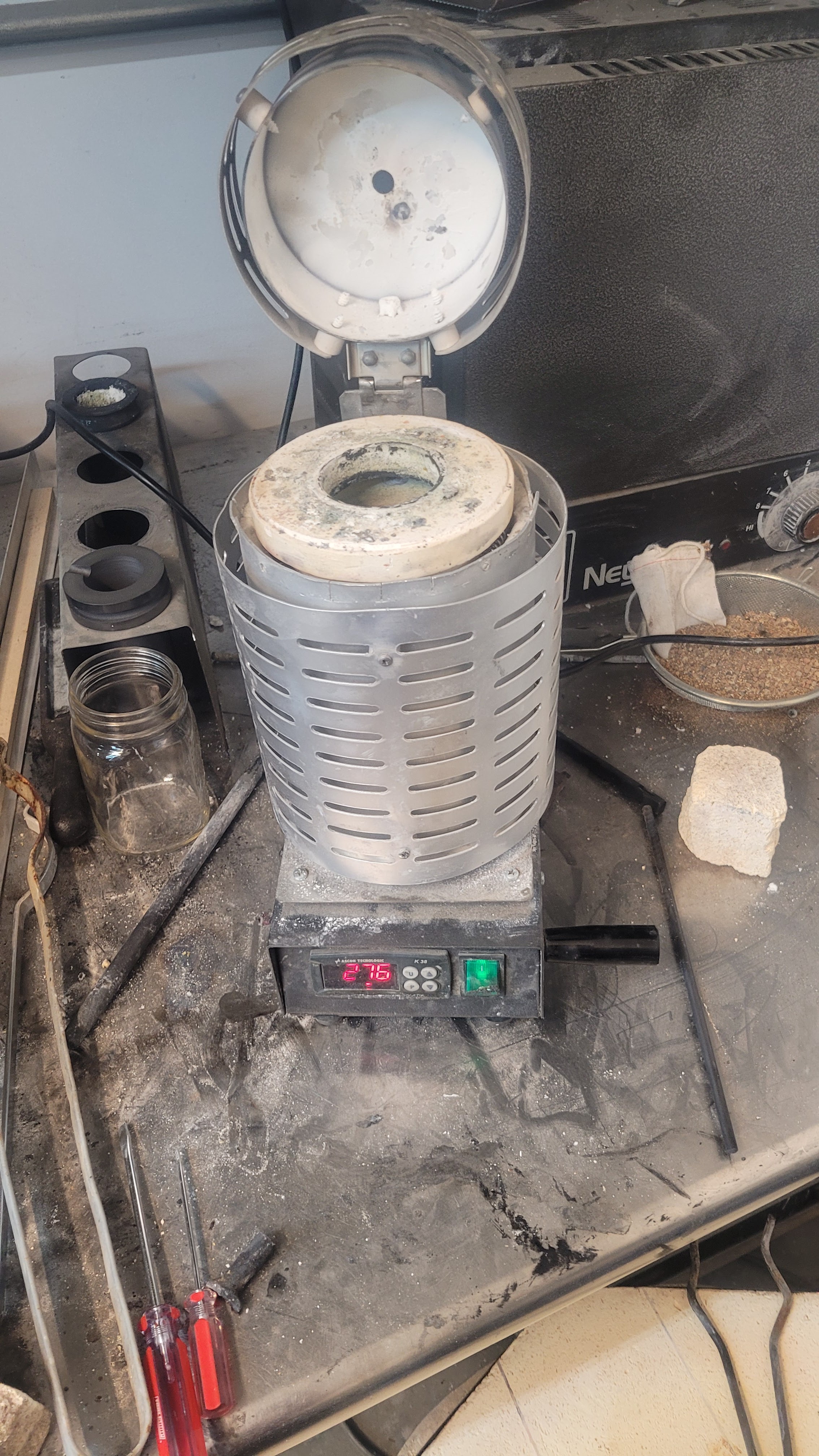
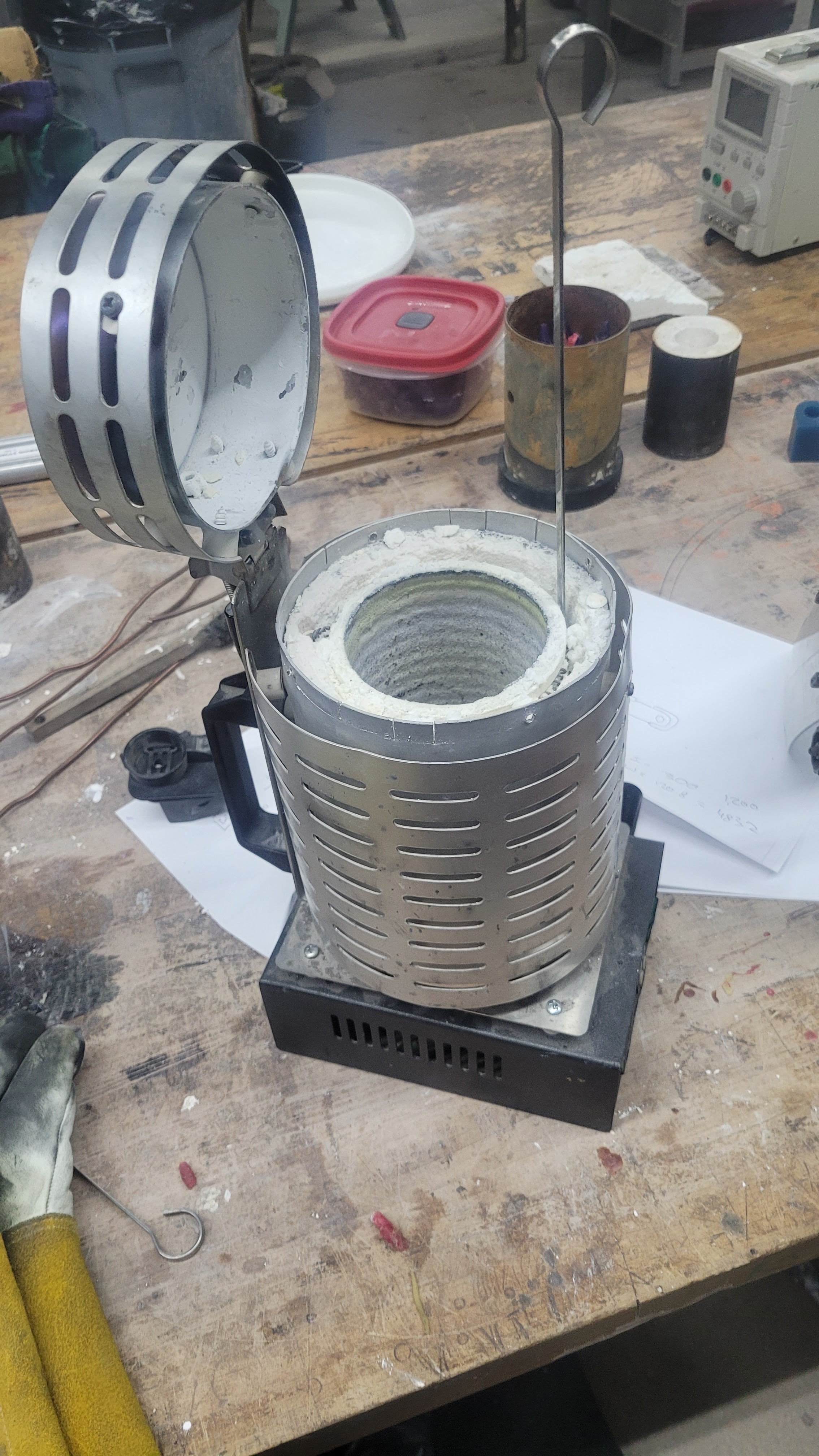
These kilns are designed to hold standard graphite crucibles used to melt ~1kg of metal up to 2100 degrees Fahrenheit. How it accomplishes this is by wrapping a resistive coil around a ceramic mandrel which is on-off regulated by a simple SCR with PID feedback from a thermocouple. Pretty simple device.
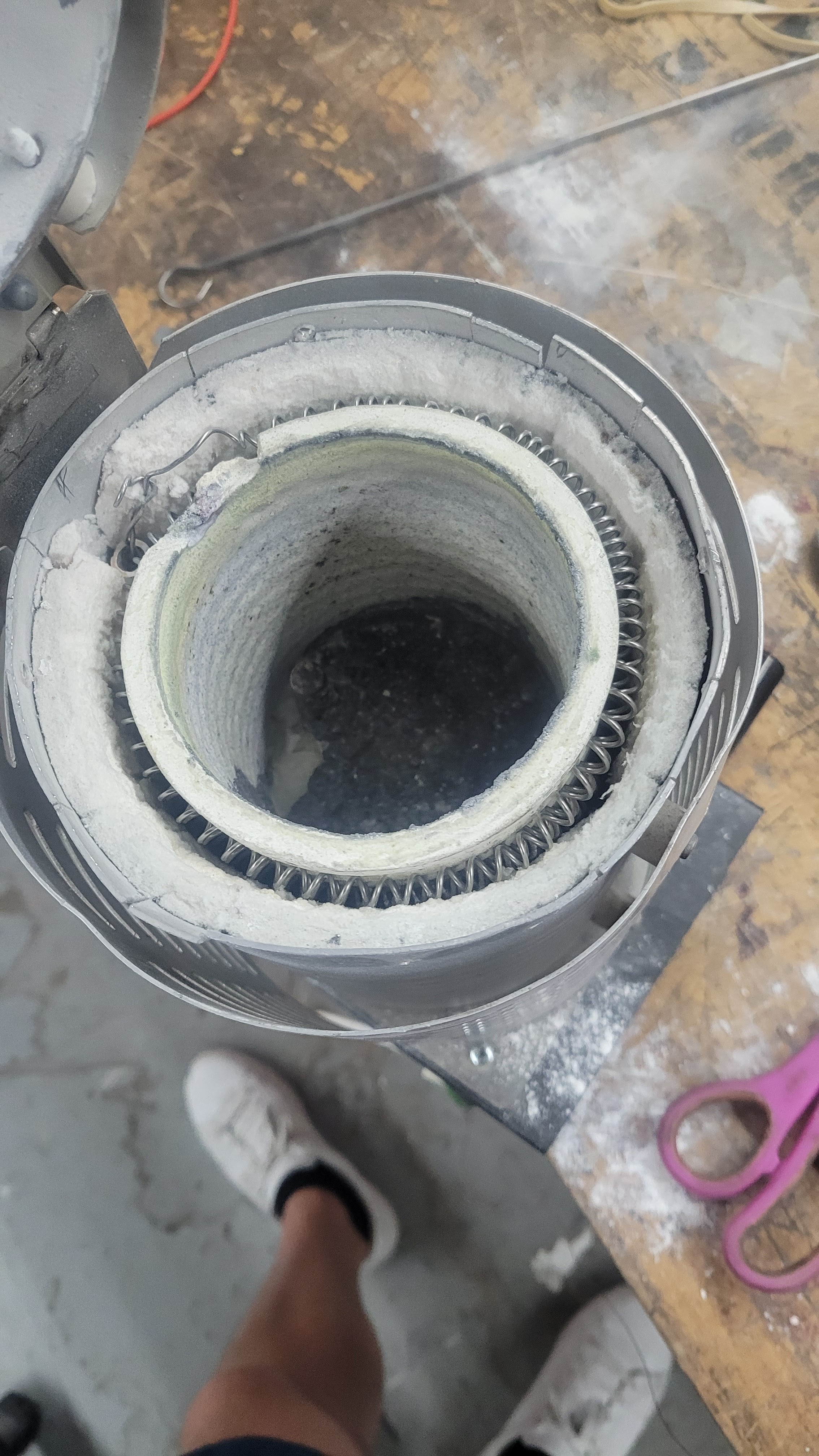
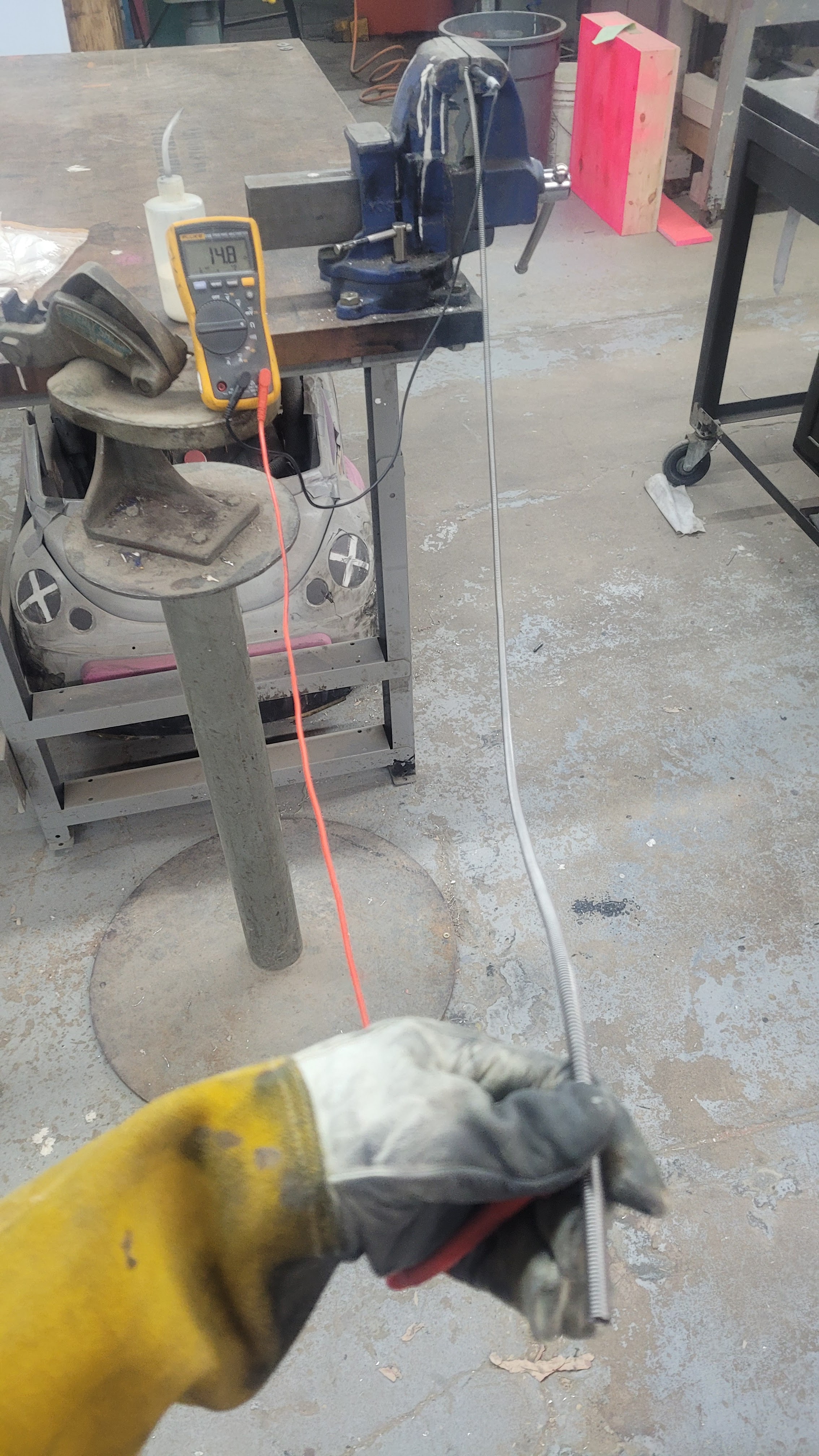
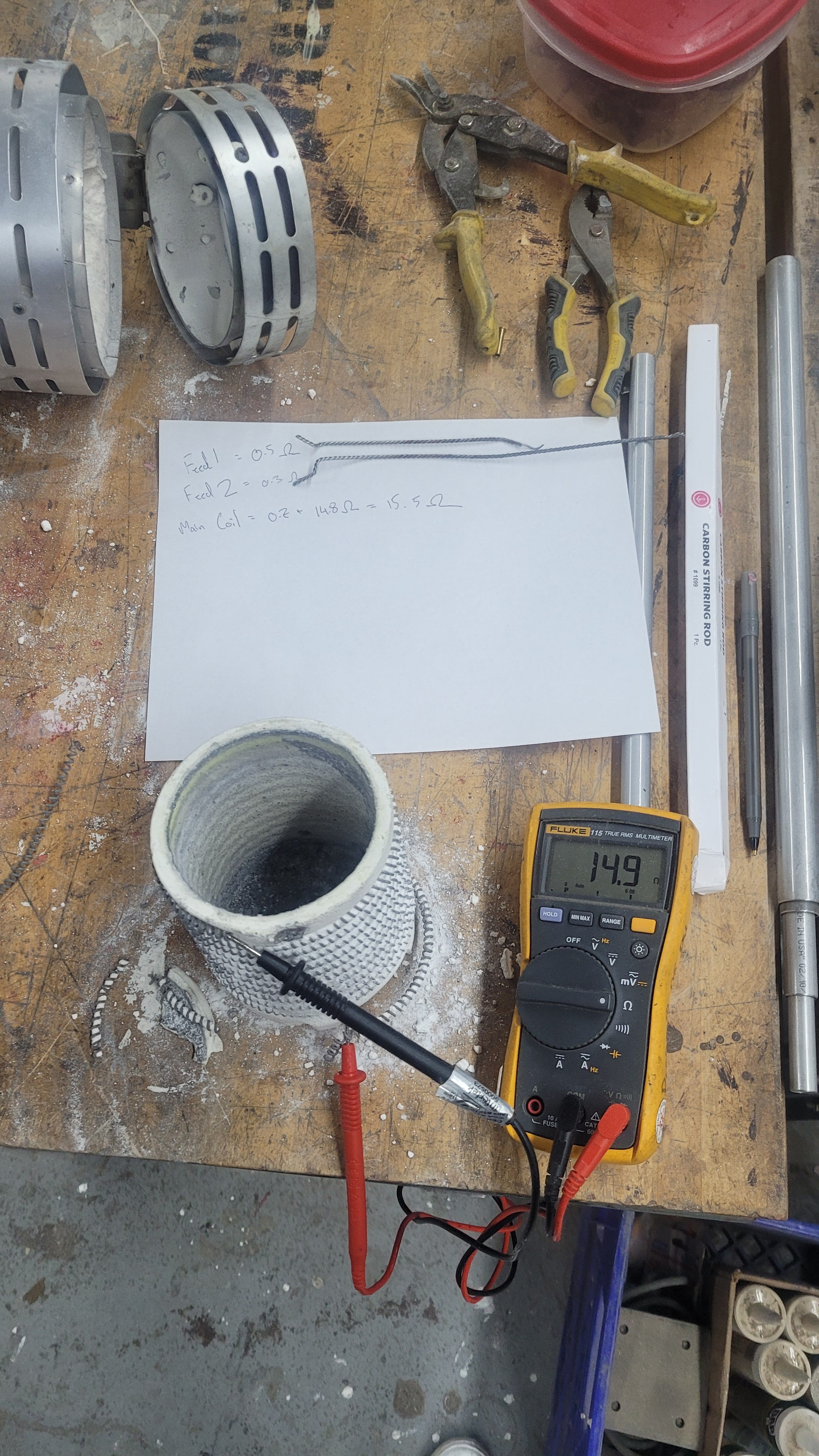
Before I started disassembling the device I had a hunch that the resistive wire had an open. Given the fact that most metals degrade in air at 2100 degrees there’s only so much time a wire can survive. After opening the bottom lid and poking around with my multimeter I confirmed that the coil was registering a solid infinite resistance.
Taking the coil apart however proved very difficult. I’m not sure if it was the overall age of the device, the abuse it experienced housed in a community makerspace, or a deliberate assembly process, but the coil was completely immersed within a tightly packed ceramic powder. I have a feeling that this was probably a technique used to help prolong the element life by displacing the air that would have otherwise contacted the wire. It took quite a bit of screwdriver persuasion to release the element and crucible mandrel from the kiln cavity.
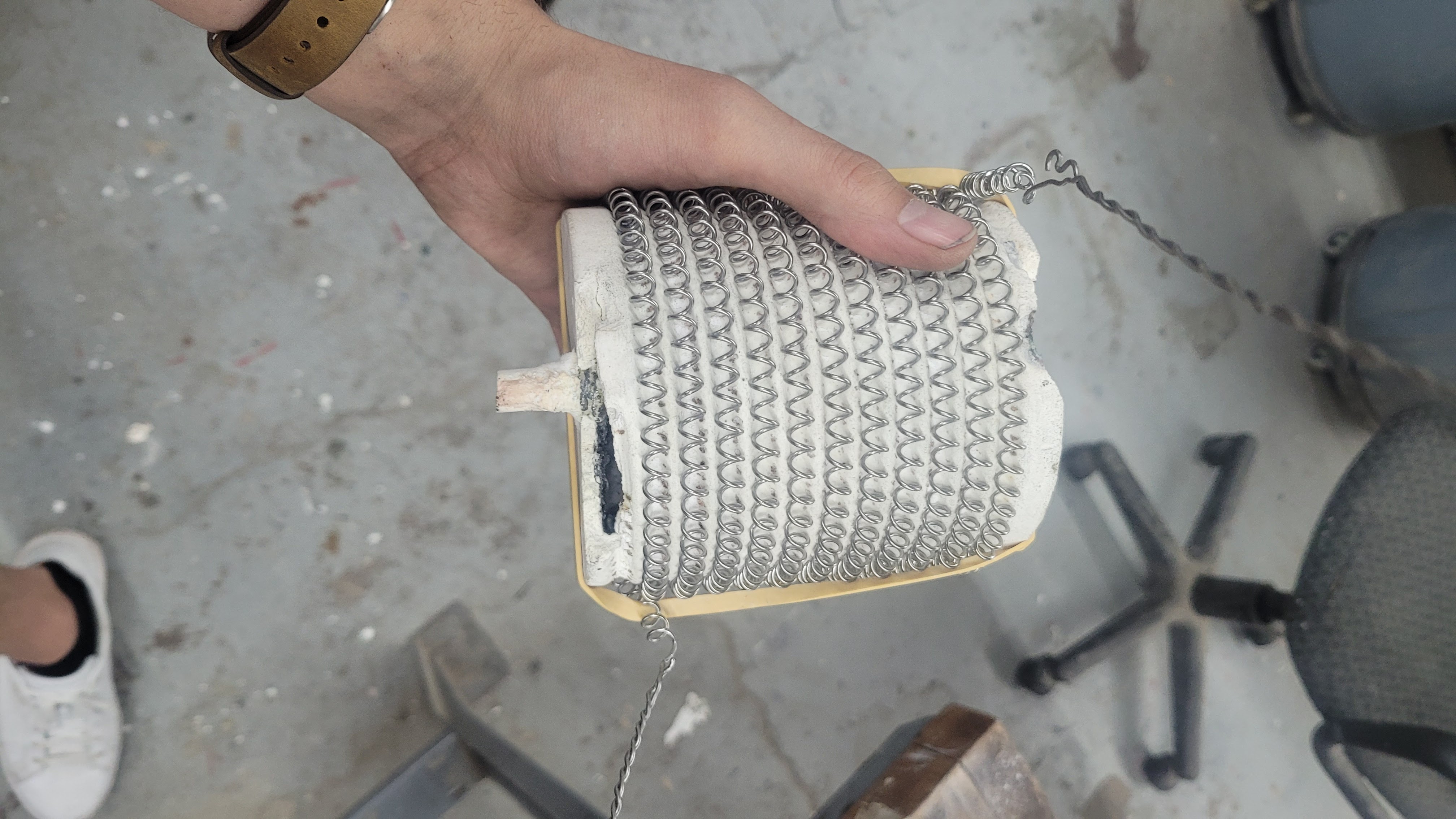
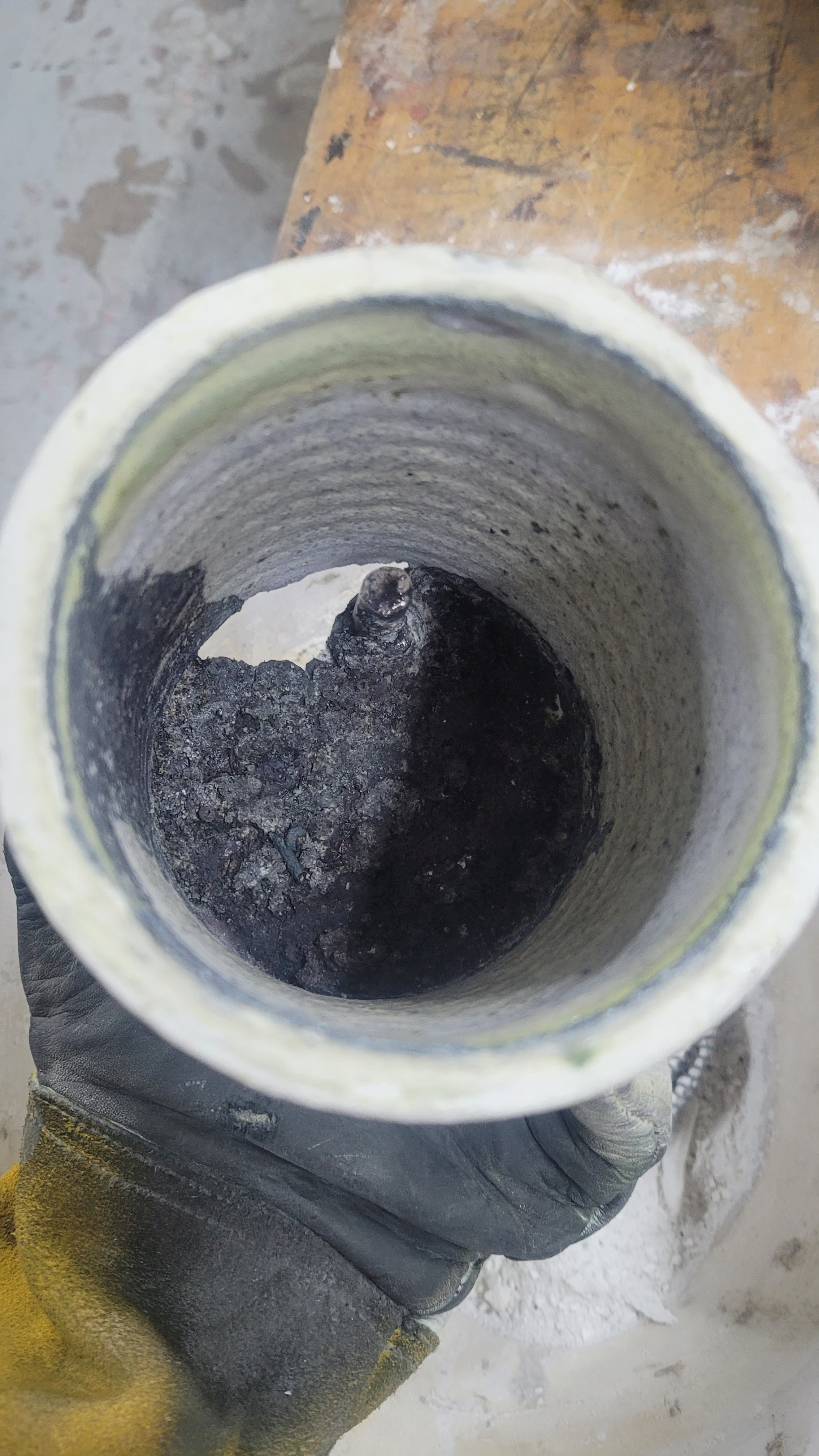
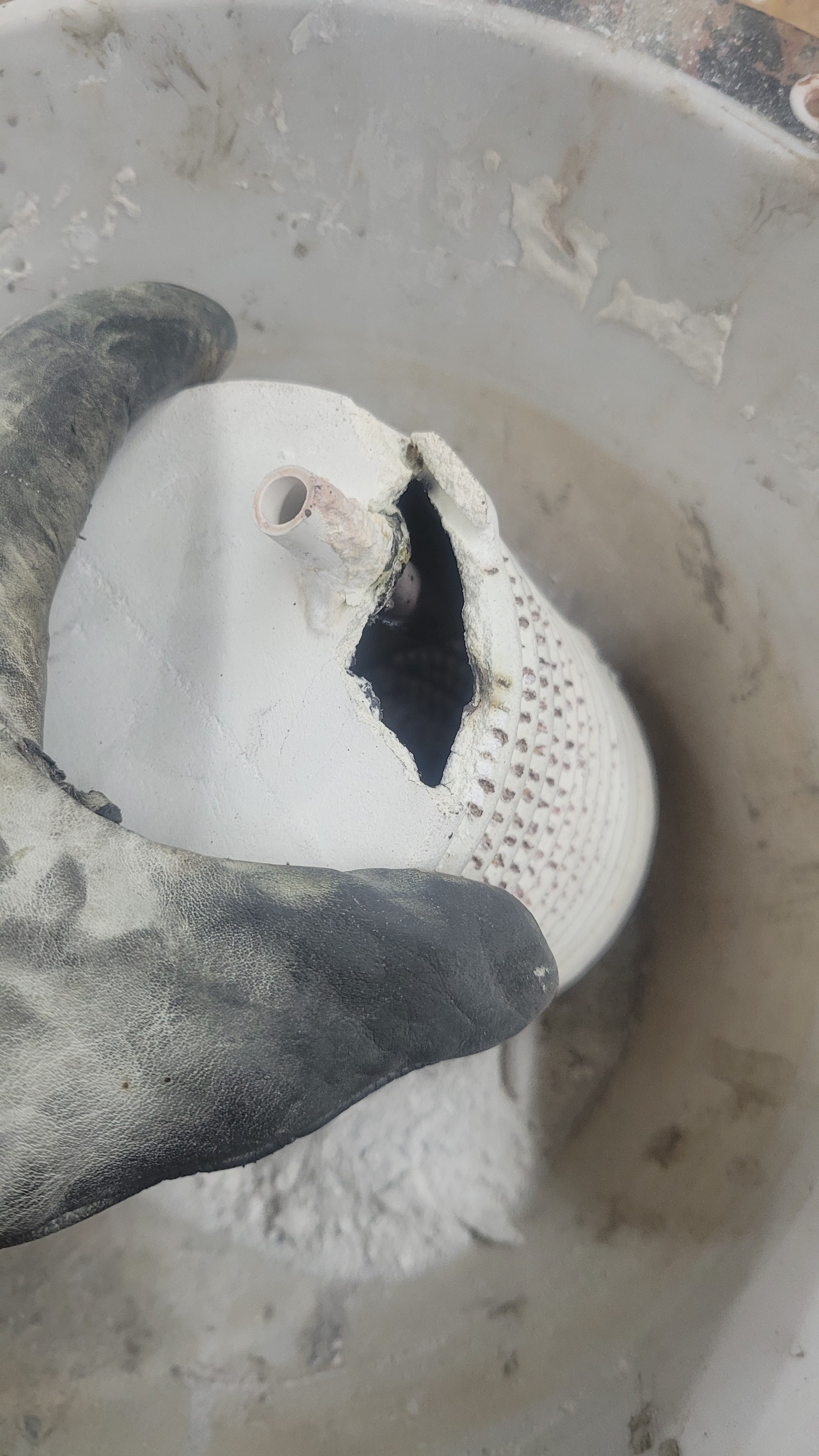
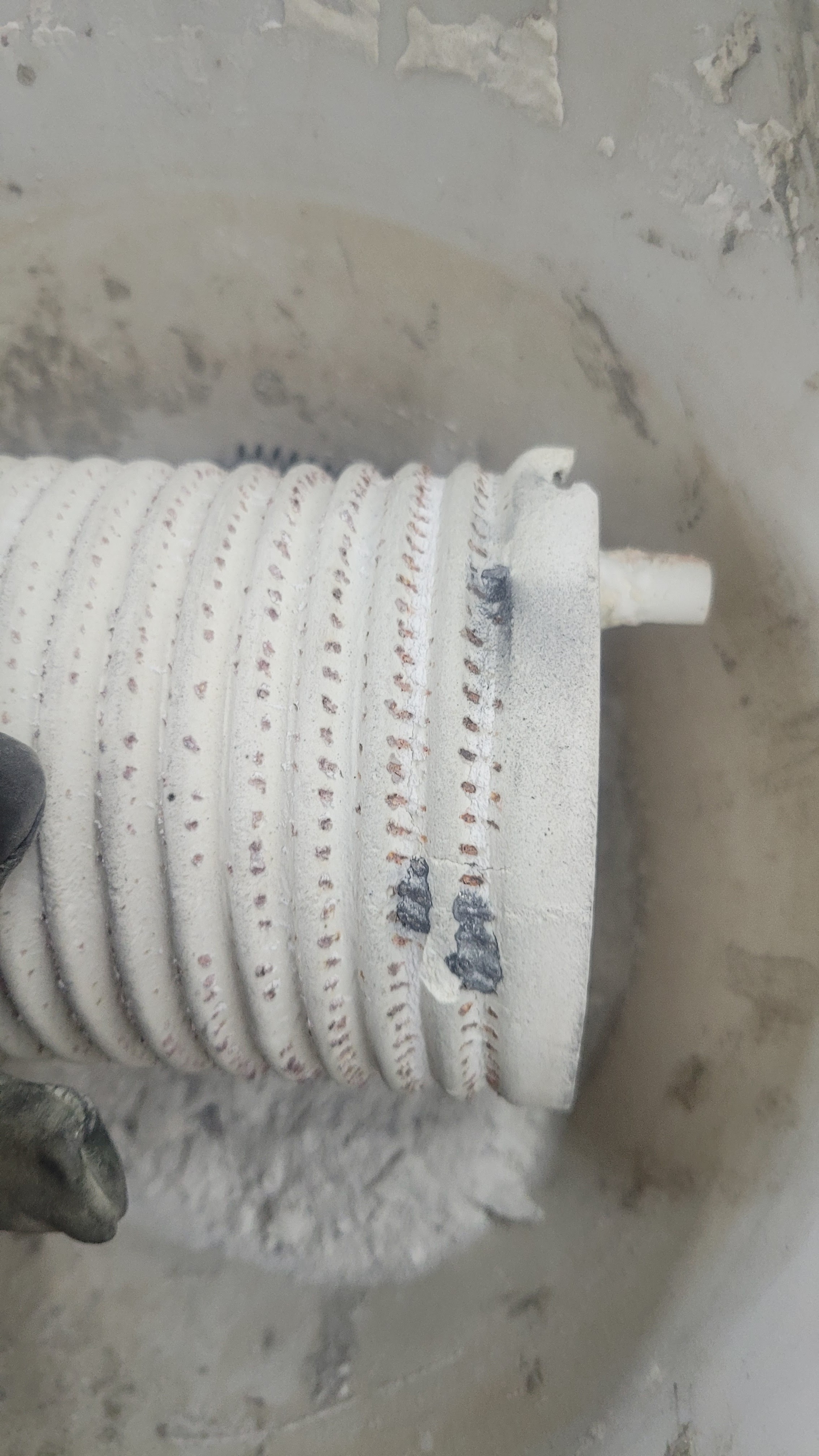
After removing the broken element I found another issue. A portion of the ceramic mandrel had cracked and a small pool of metal had worked its way out and fused against the element. Although not 100% detrimental to the function of the kiln, it did have the effect of removing the element from the mandrel difficult. Again nothing a little screwdriver persuasion couldn’t fix.
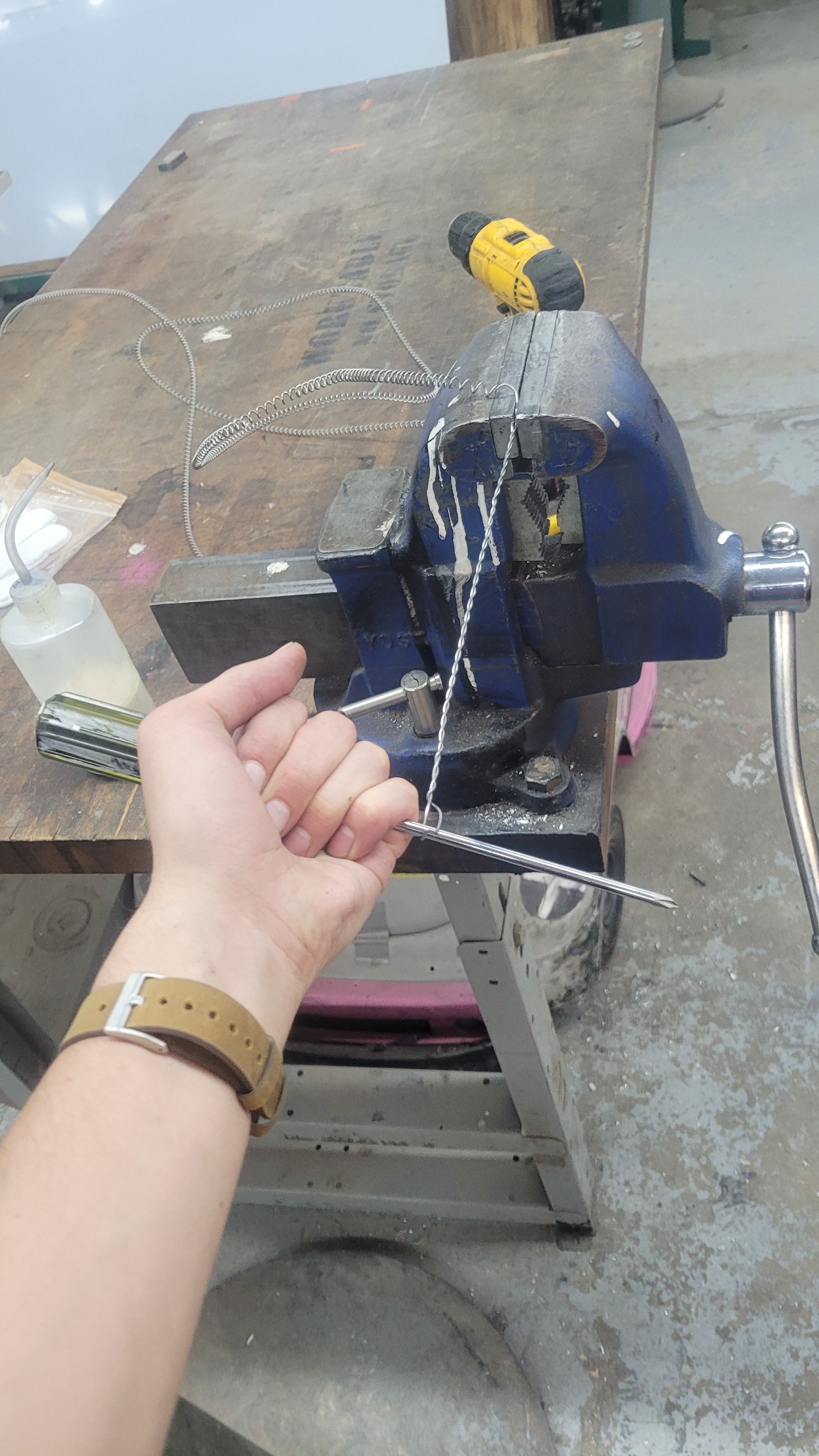
Wrapping the new element around the mandrel wasn’t too difficult. The most challenging aspect of it was properly threading it back into the kiln housing without it unspooling and or contacting itself to cause a short.
In the end I was able to hook things back together to give it some new life, but it probably won’t last very long given that the powder insulation couldn’t be stuffed back in. At least it’ll survive for a few more pours for a little bit of TLC until the new machine arrives at the space.
 Osi Van Dessel